 English Harbour · Antigua
Seasonal
Availability follows the natural rhythm of the colonies rather than a factory production calendar.
Old Fort Honey Co. began with a concern for the noticeable lack of bees around English Harbour—and a determination to keep them in a way that puts the health of the colony before the size of the harvest.
We started noticing fewer bees in the English Harbour area and became increasingly concerned about what their absence could mean for local plants, wildlife and the wider environment.
That concern led us to begin keeping bees—not simply to produce honey, but to support strong, healthy colonies and contribute positively to the landscape around us.
As we learned more about beekeeping, we became uncomfortable with systems that treat the hive primarily as a source of maximum yield. In some intensive operations, large amounts of honey are removed and sugar syrup is then used to replace the food the colony has lost.
We wanted to do things differently.
At Old Fort Honey Co., the health and welfare of the colony come before honey production. We focus on strong, resilient bees, natural stores and thoughtful hive management.
If the colony needs the honey, it stays in the hive.
We monitor the strength, temperament and overall wellbeing of each colony before considering any harvest.
Our bees keep the honey they need. We do not work to a fixed production quota or assume that every hive must produce for us.
We harvest only when a strong colony has produced a genuine surplus and local conditions have been favourable.
Some harvests may be small, delayed or unavailable. We accept that as part of working responsibly with living colonies.
Our bees forage among woodland, flowering plants and seasonal vegetation around English Harbour. Rainfall, temperature and bloom cycles can all influence the colour, aroma, texture and flavour of the honey.
Availability follows the natural rhythm of the colonies rather than a factory production calendar.
Honey is bottled in controlled batches so each harvest retains a clear connection to its time and place.
One harvest may be light and delicate; another may be darker, richer or more aromatic. We do not try to make every batch identical.
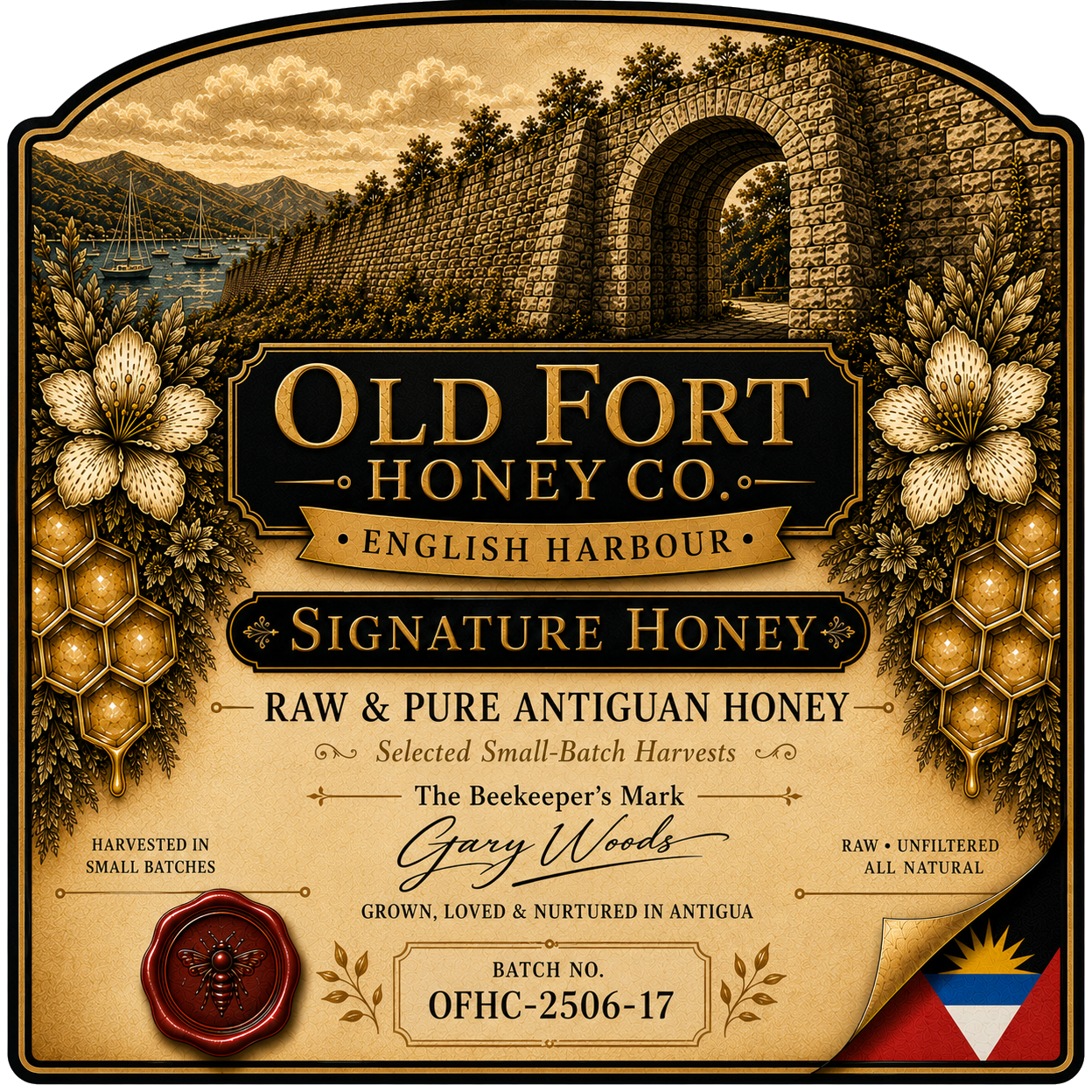
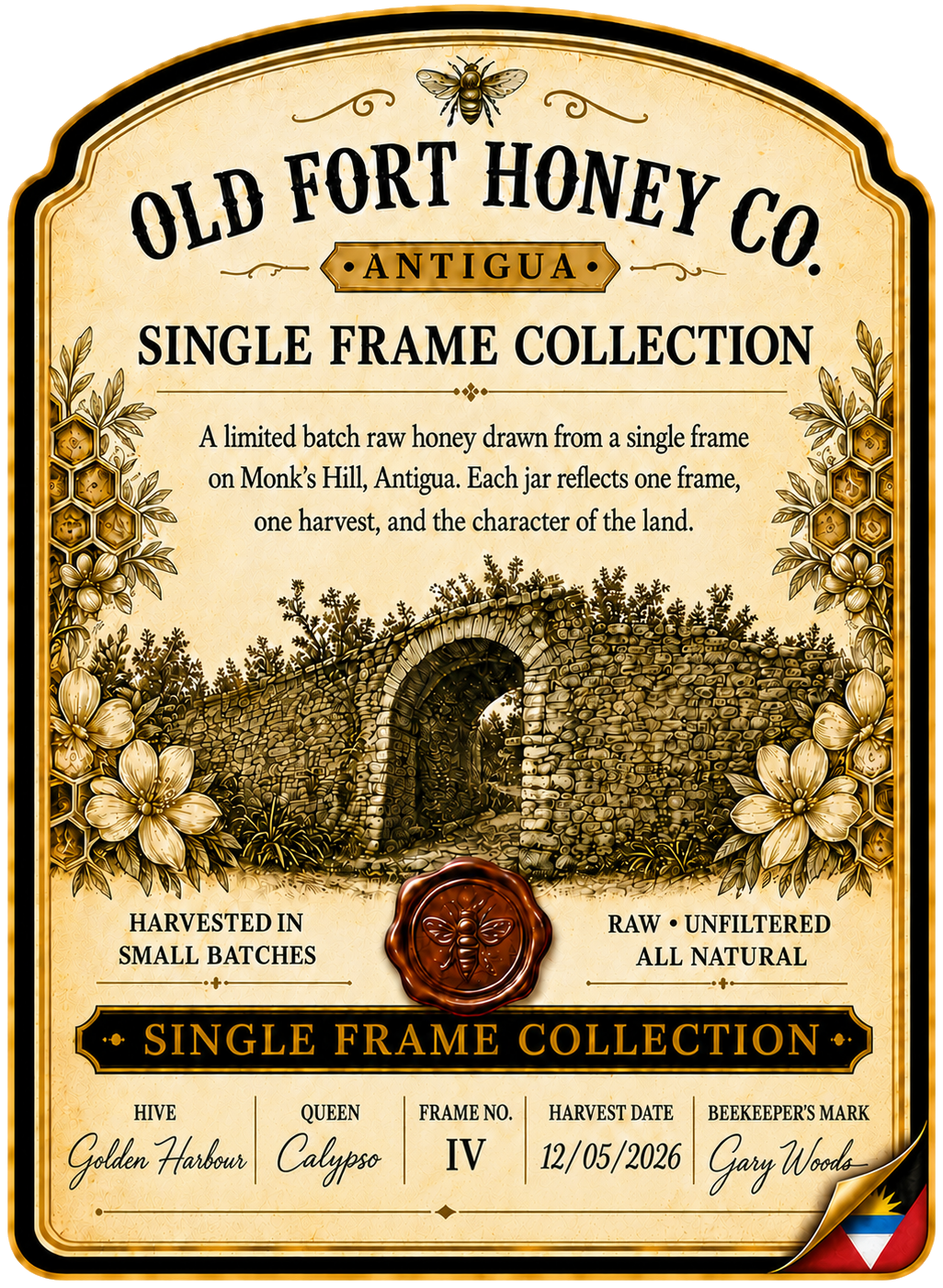
Our core Signature Honey is available in three bottle sizes, alongside Chunk Honey in glass, a pure Honeycomb Square and our limited traceable Single Frame Collection.
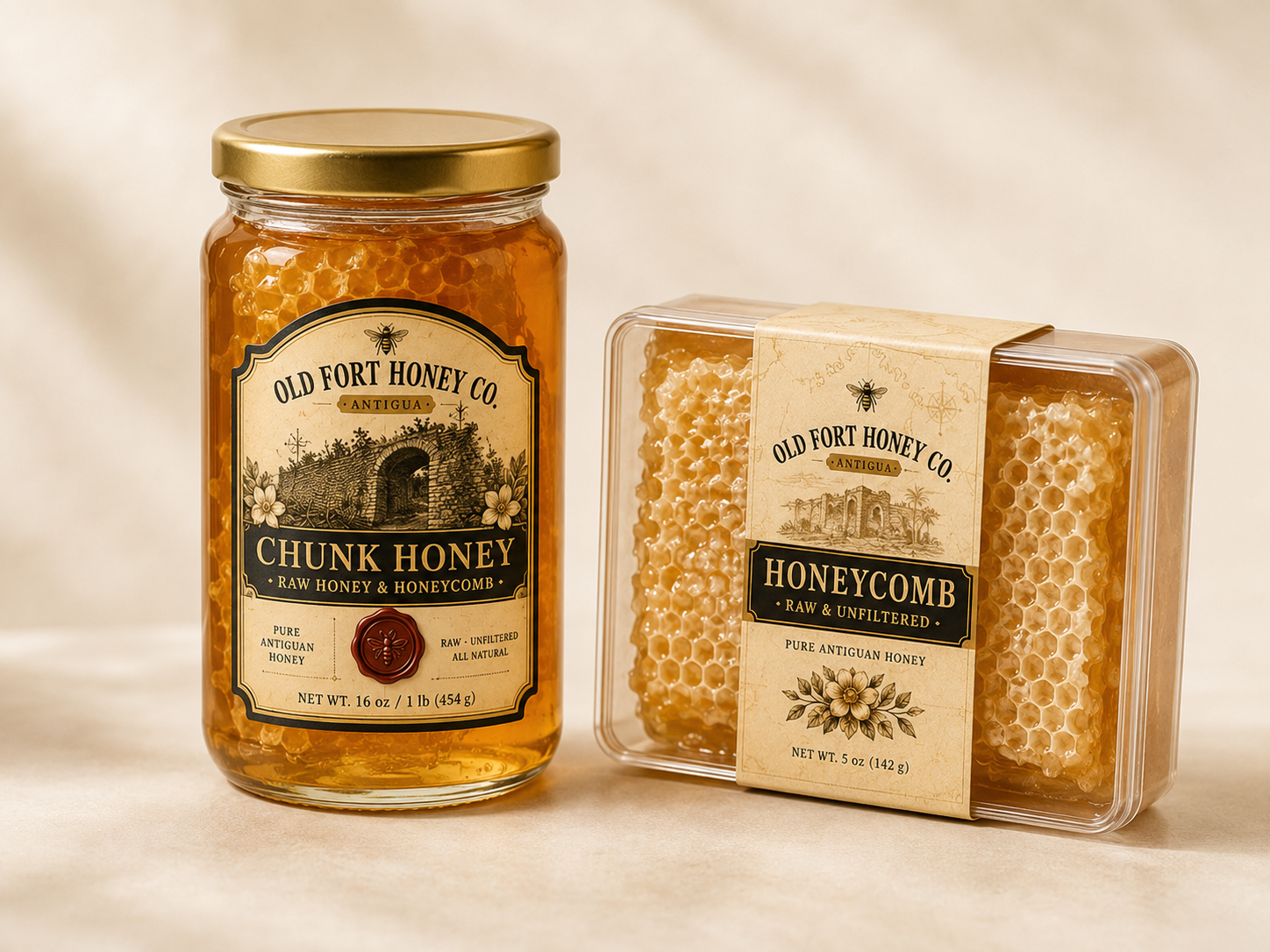
Final labelled net weights will reflect the finished filled pack. Honeycomb Square weight may naturally vary from piece to piece.
Natural honey can become cloudy, thicken or crystallise over time. This is normal and is not a sign that the honey has spoiled.
The rate of crystallisation depends on the honey’s natural sugar composition, floral source and storage temperature. To return crystallised honey to a more liquid consistency, place the closed bottle in warm water and allow it to soften gently. Avoid boiling or overheating it.
Healthy bee colonies support far more than honey production. As bees move between flowers, they help pollinate plants that form part of the wider local ecosystem.
Our goal is to produce exceptional local honey while always remembering that the bees—and the environment that supports them—come first.