 English Harbour · Antigua
Bottles per frame
Each selected frame is extracted separately and bottled as six numbered 8 oz jars. Once those six bottles are gone, that exact release is finished.
A limited release of honey kept separate from the wider harvest and traced back to the exact hive, queen, numbered frame and dates that shaped it.
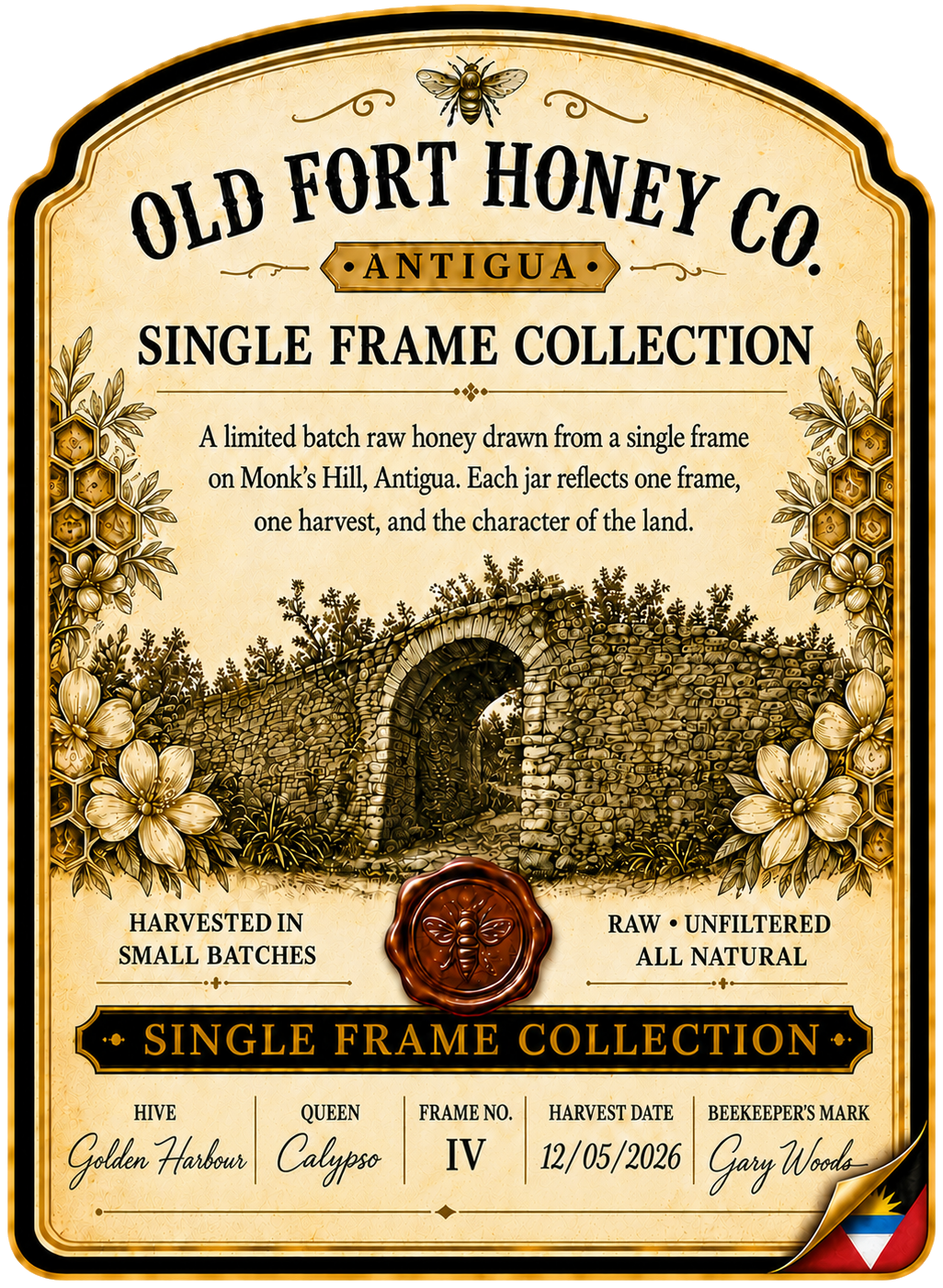
A frame is filled over a particular period by one living colony, foraging from the plants available around it at that time.
The balance of nectar sources can change from week to week. Rain, heat, flowering cycles, the position of the hive and the strength of the colony can all influence the colour, aroma, texture and flavour of the honey stored in a frame.
By extracting one carefully selected frame separately, rather than combining it with the wider harvest, we preserve more of that particular frame’s individual character.
Every Single Frame release is deliberately limited to just six 8 oz bottles. One recorded frame therefore becomes a deliberately small numbered release — a genuinely limited batch that cannot be repeated.
Each selected frame is extracted separately and bottled as six numbered 8 oz jars. Once those six bottles are gone, that exact release is finished.
The honey in six bottles represents roughly two to three thousand worker-bee lifetimes of honey production. The actual workforce involved is larger because foragers are supported by receiver bees, wax makers, cell cleaners, fanners and other workers inside the hive.
There is no fixed clock. During an exceptional nectar flow, a strong colony may fill storage space in only a few days. Under ordinary or interrupted conditions, a selected frame may take one to several weeks to fill, ripen and become sufficiently capped.
No flavour is manufactured or standardised. Each release is allowed to reflect the conditions experienced by the bees.
Different flowering trees, shrubs, herbs and coastal plants contribute different nectar and pollen at different times.
A frame filled during a dry, concentrated nectar flow may develop differently from one filled after rainfall and renewed flowering.
Shade, wind, humidity, slope and distance from flowering plants can affect how a colony forages and stores honey.
Each queen and worker population has its own strength, rhythm and foraging behaviour, contributing to the story of the release.
Every Single Frame release will carry a record that connects the jar to the colony that produced it.
Each designated frame is assigned a permanent Roman numeral from I to X.
The frame is placed into one of our named colonies: Logwood, Wild Tamarind, Sea Grape or Golden Harbour.
The actual queen leading the colony at that time is named on the release record.
We record the date the empty or prepared frame enters the colony and begins its journey.
When the honey is mature, capped and genuinely surplus, the extraction date is recorded.
The honey from that frame is extracted independently and released as only six numbered 8 oz bottles.
The collection uses Roman numerals to give each traceable frame a clear, permanent identity.
The label will always show the actual hive and queen associated with the frame at the time it was produced. These are the founding identities for the collection.
Queen Aurelia
A name inspired by one of Antigua’s characteristic woodland trees and a queen name associated with gold and light.
Queen Ember
A woodland identity paired with a warm queen name that reflects the rich amber tones found in natural honey.
Queen Solana
A coastal Antiguan name paired with a queen whose name evokes sunlight and the warmth of the island.
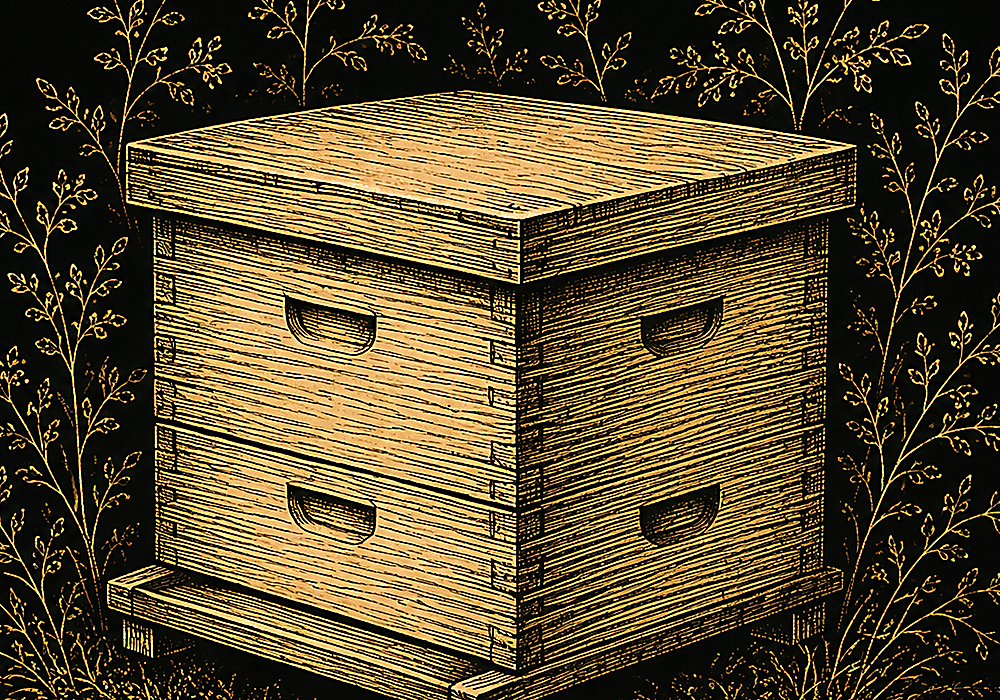
Queen Calypso
A name inspired by English Harbour at golden hour, paired with a queen name full of Caribbean character.
Queens can naturally be replaced or moved as colonies develop. The jar will record the queen that was actually leading the hive while that frame was being produced.
Each jar becomes a record of a particular colony and period in the apiary.
The information shown here is an illustrative example. Actual dates and pairings will be taken from the apiary records for each release.
Each selected frame becomes only six 8 oz bottles. Once those six jars have been bottled and sold, the combination of hive, queen, frame and dates belongs to that one release.
Future frames may come from the same colony, but the season, forage and circumstances will have changed. That is what makes every Single Frame release genuinely individual.